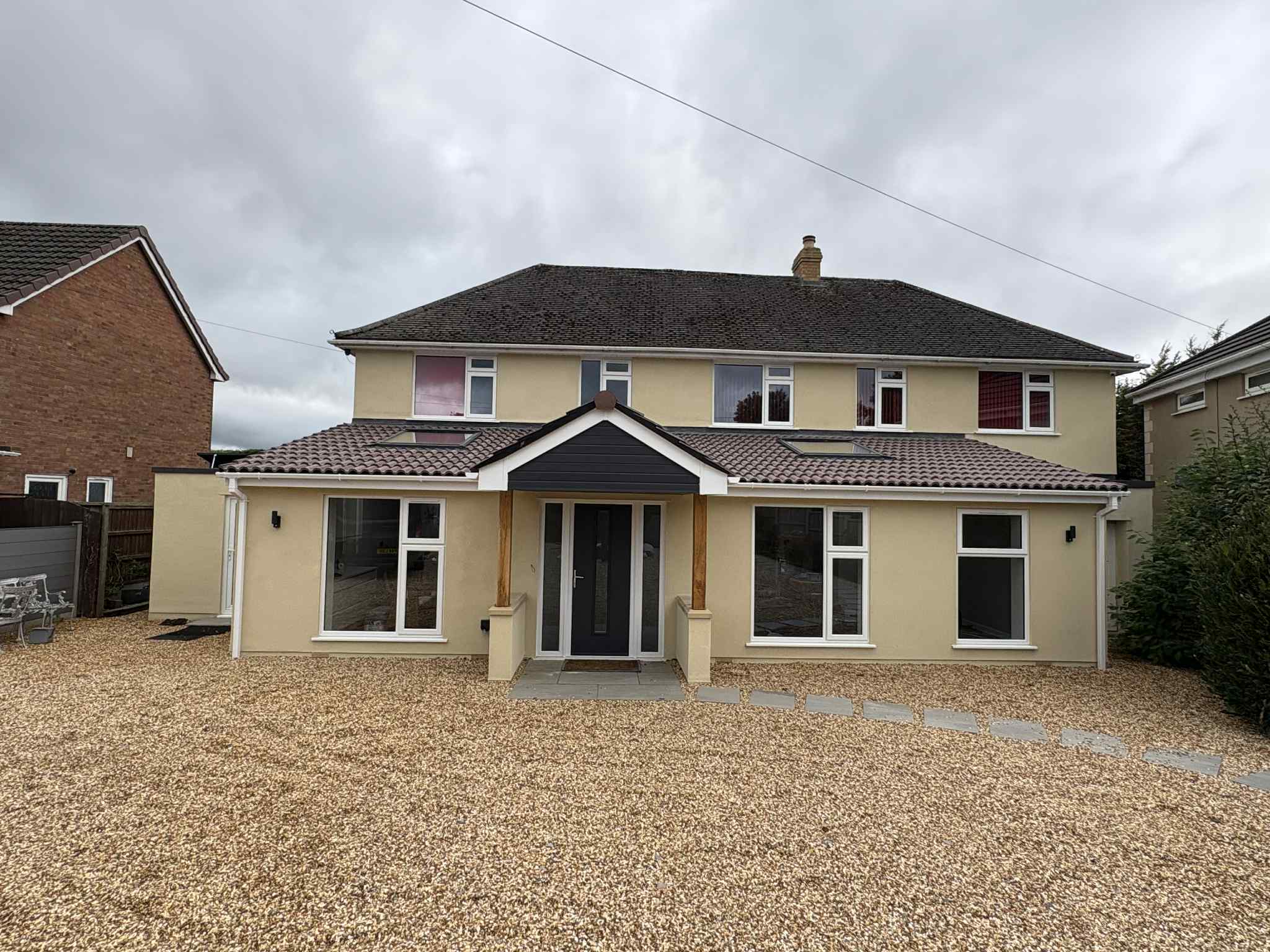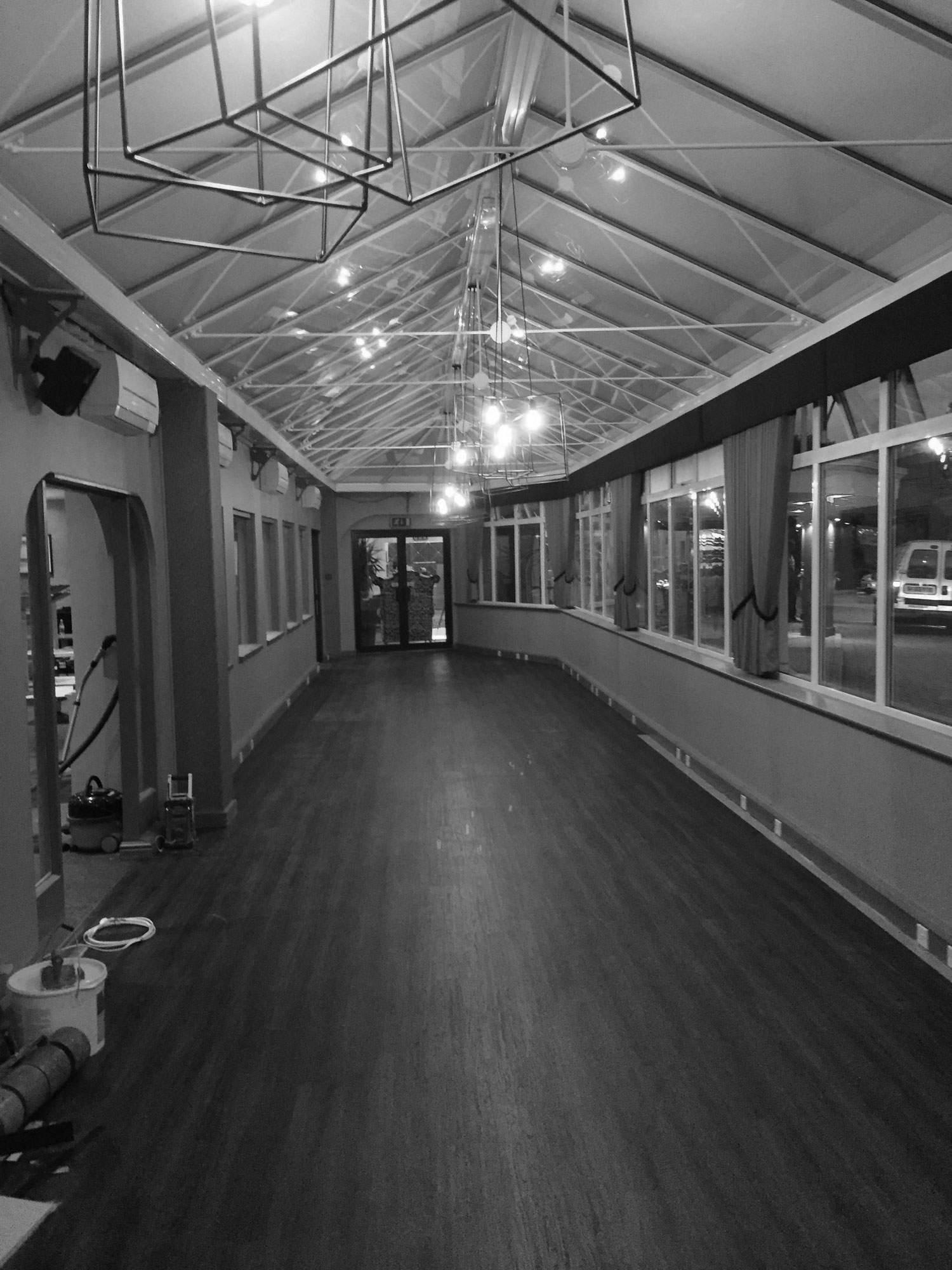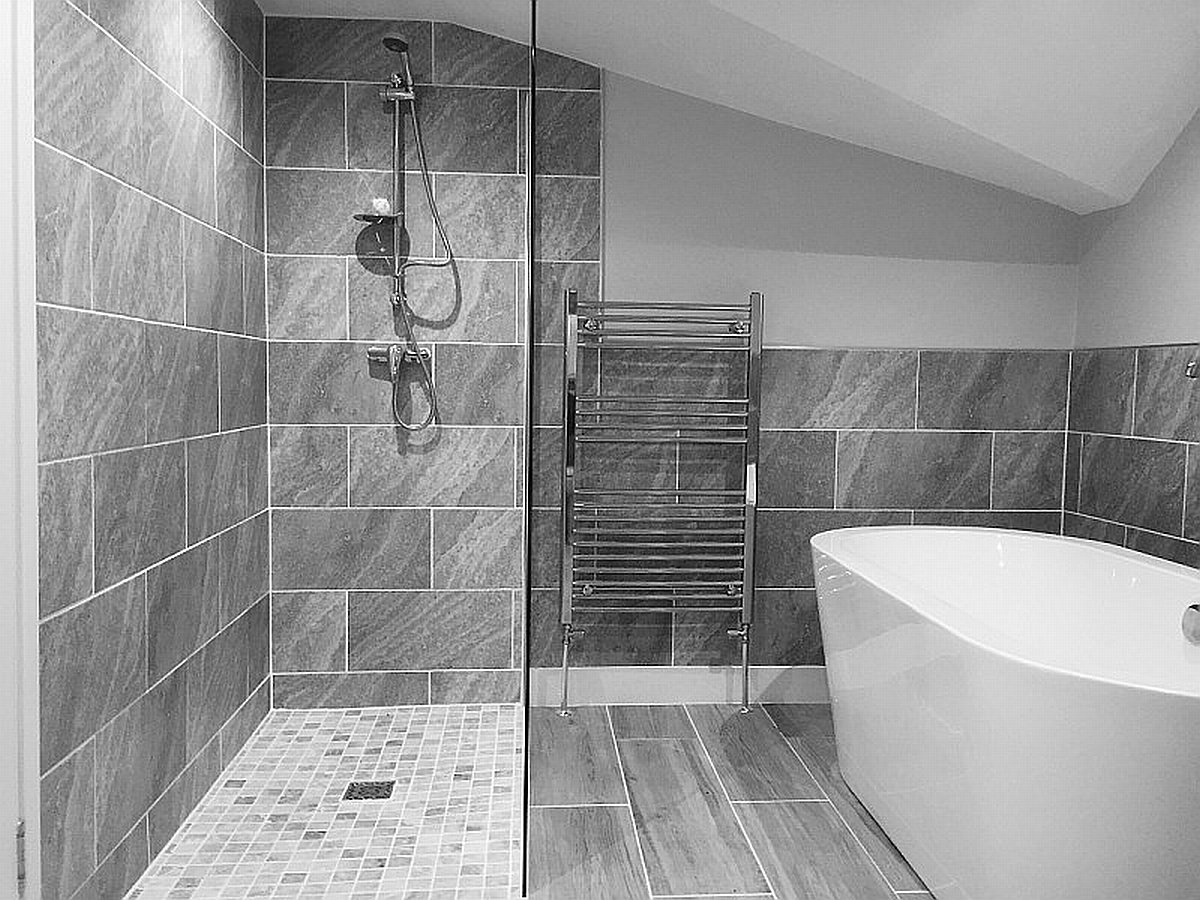
Bi-folding doors release true open-plan living: you dissolve the garden boundary, flood spaces with high-VT low‑e daylight, and enjoy flexible circulation via slim sightlines, flush thresholds, and tailored panel stacking. Specify aluminium frames, PAS 24 multi-point locks, laminated glass, and low-iron panes for clarity, security, and durability. Align openings for cross-ventilation, add external shading, and tune lighting and kitchen flow around the doors. You’ll see how performance, comfort, and design precision come together just ahead.
Key Takeaways
- Dissolve boundaries, maximize daylight, and garden views with full-height bi-folds, slim sightlines, and flush thresholds for seamless indoor-outdoor continuity.
- Create flexible zones and smooth circulation using varied panel counts and stacking directions, coordinating furniture grids and thresholds to keep spaces open.
- Boost ventilation and comfort by aligning openings with prevailing winds, adding high-level vents and insect screens, and exposing thermal mass for temperature stability.
- Improve kitchen flow with clear 1,000–1,200 mm aisles around the island, routes perpendicular to doors, and layered task, pendant, and low-glare wall-wash lighting.
- Prioritize safety, security, and longevity using PAS 24 multi-point locks, laminated panes, slip-resistant low thresholds, concealed drainage, and scheduled cleaning and lubrication.
The Case for Open-Plan Living With Bi-Folds
While open-plan living thrives on uninterrupted flow, bi-folding doors make it perform: they dissolve the boundary between interior and garden, maximize daylight with slim sightlines, and enable flexible zoning without heavy partitioning.
You’ll choose panel counts and stacking directions to tune circulation: a 3+1 with an everyday traffic door supports access, while 4- or 6-panel sets clear wider apertures for event mode. Specify a flush threshold with thermal break and concealed drainage to align internal-external floor finishes without step risk. Coordinate a steel or engineered-wood lintel sized for span and service loads; allow for head deflection tolerance so seals remain true. Top-hung gear delivers smoother operation on large panes; bottom-rolling suits retrofit where structure can’t carry weight. Select powder-coated aluminum for slim profiles and low upkeep; add multi-point locking and laminated glass for security. Integrate acoustic gaskets, pressure equalization chambers, and marine-grade finishes in coastal zones for durability.
Light, Views, and Ventilation: Designing for Wellbeing
To maximize natural daylight, you’ll specify full-height bi-folds with slim sightlines, high-VT low‑e glass, and orientations that capture morning and afternoon sun without glare. You’ll frame seamless garden views by aligning panel modules to key sightlines, recessing tracks for a flush threshold, and matching mullion spacing to landscape axes. For healthy cross-ventilation, you’ll combine operable lead panels, night‑latch positions, and stack‑both‑ends configurations to drive pressure‑based airflow across the plan.
Maximizing Natural Daylight
As you extend an open-plan space with bi‑folding doors, daylight becomes a controllable design asset—shaping wellbeing, views, and airflow as much as any finish. Position the opening to suit sun paths: east adds morning brightness, west needs glare control, south (north in the southern hemisphere) invites winter gain, and north delivers consistent, cool light. Specify glass with high VLT and appropriate g-value/SHGC; pair low‑e coatings with thermally broken frames for comfort. Optimize panel height—daylight typically penetrates 2–2.5× the head height into a room. Use slim mullions, high-level clerestory panels, and matte, light-reflective surfaces to lift daylight factor while limiting veiling glare. Integrate fixed overhangs or external blinds for seasonal control, and commission sensors to balance daylight with efficient artificial lighting, and verify glare risk.
Framing Seamless Garden Views
Beyond expanding floor area, bi‑folding doors should choreograph a continuous visual field between kitchen–living zones and the garden. You’ll get the crispest panorama by minimising frame depth, aligning head and sill levels, and specifying low‑iron glazing to remove green tint. Set structural openings to capture focal points—trees, water, seating—so your eye reads a single landscape composition from prep to sofa. Choose a flush threshold to erase internal–external discontinuity and plan lighting so reflections don’t fight the view at night.
| Consideration | Specification |
|---|---|
| Sightline width | 35–45 mm mullions |
| Threshold | Flush 0–10 mm step |
| Glazing | Low‑iron; high VLT, neutral tint |
| Head alignment | Match to ceiling datum |
Coordinate planting heights and hardscape lines so frames edit the view, delivering depth, privacy, and year‑round visual continuity from inside spaces.
Healthy Cross-Ventilation
While bi-folding doors dissolve boundaries, they also release pressure‑driven airflow for a healthier plan—if you detail them correctly. Position openings to align with prevailing winds and pair the doors with high‑level vents or skylights to create a stack effect. You’ll want at least two exposure points: intake at the garden elevation, exhaust across the plan. Specify narrow stiles, low thresholds, and continuous trickle vents for purge and background rates. Use insect screens and hold‑open hardware so you can ventilate without compromise. Size panels to achieve 5–8 air changes per hour during purge; model with CFD if the plan’s deep. Balance security and air with night‑latch settings. Finally, commission the seals—air‑tight when closed, friction‑managed when open—to keep comfort, not drafts. Test performance during seasonal shifts.
Choosing Materials and Finishes: Aluminium, Timber, or Upvc?
Before you choose frames for your bi-folds, anchor the decision to performance, maintenance, and look—then match each material to your use case. Aluminium delivers slim sightlines, high stiffness-to-weight, and reliable running on long spans. Specify thermally broken profiles for comfort, marine-grade powder coating, and stainless hardware near coasts. You’ll get sharp, crisp edges and a broad RAL palette with matt, satin, or anodised finishes.
Timber gives tactile warmth and bespoke joinery. Opt for engineered laminations for stability, durable species like Accoya, and factory-finished microporous coatings. Expect periodic re-coating; design drip details, cills, and ventilated rebates to keep moisture moving.
uPVC offers value and low upkeep. Multi-chamber frames are bulkier; plan for deeper reveals and sturdier hinges on wide panels. Choose foiled finishes for grain realism and UV stability. Across all materials, confirm weather seals, drainage paths, threshold options, and tested hardware that supports smooth stacking and secure locking.
Glazing and Energy Performance: U-Values, Solar Gain, and Noise Control
You’ll optimise whole-door U-values by pairing low-e double or triple glazing, argon/krypton fill, thermally broken frames, and warm-edge spacers to meet your energy targets. To control solar gain, we’ll match g-values/SHGC to orientation, using selective coatings, solar-control interlayers, or integral blinds to moderate peaks while preserving daylight. We’ll model the U‑value vs g‑value trade‑off for your layout so the bi-folds feel open and bright without overheating or excess heating load.
Optimizing U-Values
As you refine an open-plan scheme, optimizing U‑values in your bi‑folds governs comfort, running costs, and compliance. Start by targeting whole-door U-values, not just glass. Specify thermally broken frames, insulated thresholds, and deep glazing rebates to limit conductive paths. Choose low‑e coatings—you’ll specify argon or krypton fill and warm‑edge spacers to suppress edge losses. Triple glazing helps in harsher climates; high-performance double can suffice elsewhere. Guarantee installation quality: continuous airtight tapes, insulated packers, and shimmed fixings. Ask for certified simulations and on-site verification to match design intent. Coordinate with your architect to balance thermal targets with sightlines, panel widths, and operating hardware.
| Specification | Indicative U-value |
|---|---|
| Whole-door (best-in-class) | 0.8–1.0 W/m²K |
| High-spec double glazed | 1.1–1.3 W/m²K |
| Thermally broken aluminium | 1.2–1.5 W/m²K |
| Poorly insulated frame | 2.0+ W/m²K |
Controlling Solar Gain
While generous glazing connects inside and out, unmanaged solar gain can overheat an open-plan room and spike cooling loads.
You’ll control gains by specifying low-g (solar factor/SHGC 0.28–0.40) glass tuned to orientation; east/west need lower SHGC, south can be moderated with fixed shading sized to solar altitude. Use spectrally selective low‑E coatings to admit daylight while blocking IR and UV. Include external shading: deep eaves, brise-soleil, pergolas, or adjustable louvres; aim for 45–60% summer shading on west facades. Consider integral blinds or dynamic glazing for peak days without cluttering sightlines. Plan cross-ventilation and night purging to flush built-up heat; expose thermal mass (concrete/tile) to buffer swings. Commission shading controls with scenes tied to sun sensors so comfort, glare, and cooling energy stay highly predictable.
Layout and Flow: Kitchens, Islands, and Zones That Work
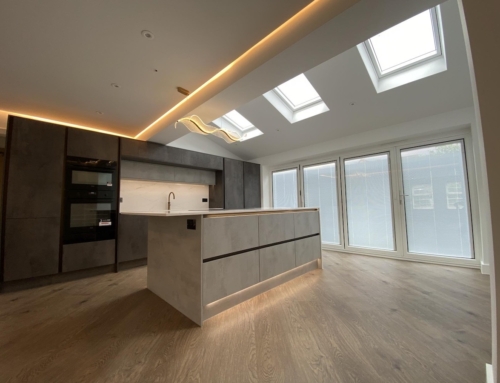
Because bi‑folding doors dissolve boundaries, the kitchen layout must choreograph circulation between prep, dining, and terrace zones with intention. Map primary routes from hob to sink to fridge, then align them perpendicular to the door threshold so cross-traffic to the garden doesn’t cut through the hot zone. Keep a 1,000–1,200 mm clear aisle around the island; widen to 1,300 mm where panels stack.
Position the island as a mediator: prep side faces services; social side addresses the view. Integrate a flush downdraft or ceiling extractor to preserve sightlines. Place tall units away from the glazing to prevent visual bulk; anchor them on an internal wall. Use resilient flooring datum changes or ceiling rafts to signal zones without blocking light. Plan power and task lighting on separate circuits—pendants for dining, high-CRI under-cabinet for prep, low-glare wall-wash toward the doors. Align furniture grids to the door mullions for visual calm.
Security, Safety, and Maintenance: Living With Your Bi-Folds
Though they feel effortless, bi-folds are precision systems that rely on the right specification and routine care to stay secure, safe, and smooth. Prioritise PAS 24–rated multi-point locks, laminated panes, and beaded frames. Specify keyed-alike cylinders and hinge guards; you’ll reduce attack points without compromising sightlines. For safety, integrate low-threshold ramps with slip-resistant cappings, child-safe catches, and finger-safe gasket profiles.
Schedule care quarterly: vacuum tracks, wash with pH-neutral cleaner, and lightly lubricate rollers with PTFE, not oil. Check drainage slots after storms; clear grit to stop binding. If panels misalign, adjust carriage height screws a quarter turn—don’t force the meeting stile. Annually, test weather seals and recalibrate restrictor stays.
| Focus | What to specify | Client check |
|---|---|---|
| Security | PAS 24 locks, laminated glass, hinge guards | Keys controlled; cylinders flush |
| Safety | Low thresholds, finger-safe gaskets, stays | Latch smooth; no pinch points |
| Maintenance | PTFE on rollers; pH-neutral cleaner | Tracks clean; drains clear |
Frequently Asked Questions
Do I Need Planning Permission or Building Control Approval for Bi-Folds?
Usually, you won’t need planning permission for bi‑folds under Permitted Development, unless it’s a new opening, a listed building, or a conservation area. You will need Building Regulations compliance: structure (lintels/steel, calcs), thermal performance (Part L/U‑values), safety glazing (Part K), ventilation (Part F), access (Part M), and security (Part Q). Use a FENSA/Certass installer for replacements or submit a Building Control Notice. Widening openings may trigger Party Wall procedures too.
What Is the Typical Cost Range and Financing Options for Bi-Fold Installations?
Expect installed costs of £4,500–£12,000+ depending on span, panel count, aluminium vs uPVC, thermal breaks, and glass specs (triple, solar, laminated). Structural steel, drainage thresholds, and finishes can add £800–£3,000. You can spread costs via 0% or low-APR finance, staged progress payments, personal loans, or secured credit. Some providers offer deposit-from-10% and 12–60 month terms. Check green grants if upgrading U-values, and request itemised quotes. You’ll secure better package rates.
How Long Does Installation Take, and How Disruptive Is the Process?
Installation typically takes 1–3 days—because miracles need measurements; add 1–2 more if you need new opening, lintel, or electrics involved. Disruption’s modest: expect noise, dust, and limits while we protect floors, isolate zone, and manage waste. We laser-check structural opening, set frames with packers to tolerance, fix, glaze, seal, and commission hardware. You’ll get snagging day; silicone cures within 24 hours. You’re back quickly—unless the coffee machine’s in sealed room.
Will Bi-Fold Doors Increase My Home’s Resale Value and Buyer Appeal?
Yes—well-specified bi-fold doors typically lift resale value and buyer appeal. You’re offering brighter interiors, seamless indoor–outdoor flow, and detailing. Prioritize slim sightlines, thermally broken frames, low‑E double or triple glazing achieving low U‑values, and PAS 24 security for credibility. Flush thresholds and smooth hardware signal quality. Choose durable powder-coated finishes, warranties, and documented certifications; agents can feature these in listings. Buyers perceive efficiency, lifestyle flexibility, and design intent—justifying stronger offers.
Can Bi-Folds Integrate With Smart Home Systems and Automated Blinds?
Of course they can—because what modern door doesn’t want an API? Yes: bi-folds integrate with hubs and automated blinds. Specify motorized locks, magnetic contacts, and wind/rain sensors; pair via Zigbee/Z-Wave/Wi‑Fi, or HomeKit, Alexa, Google. Choose 24V concealed blind motors with sun sensors, scene control, and geofencing. Plan cable routes in the head track, allow power spurs, and keep manual overrides. Calibrate pinch-protection, interlocks, and safety edges; commission with certified installers.