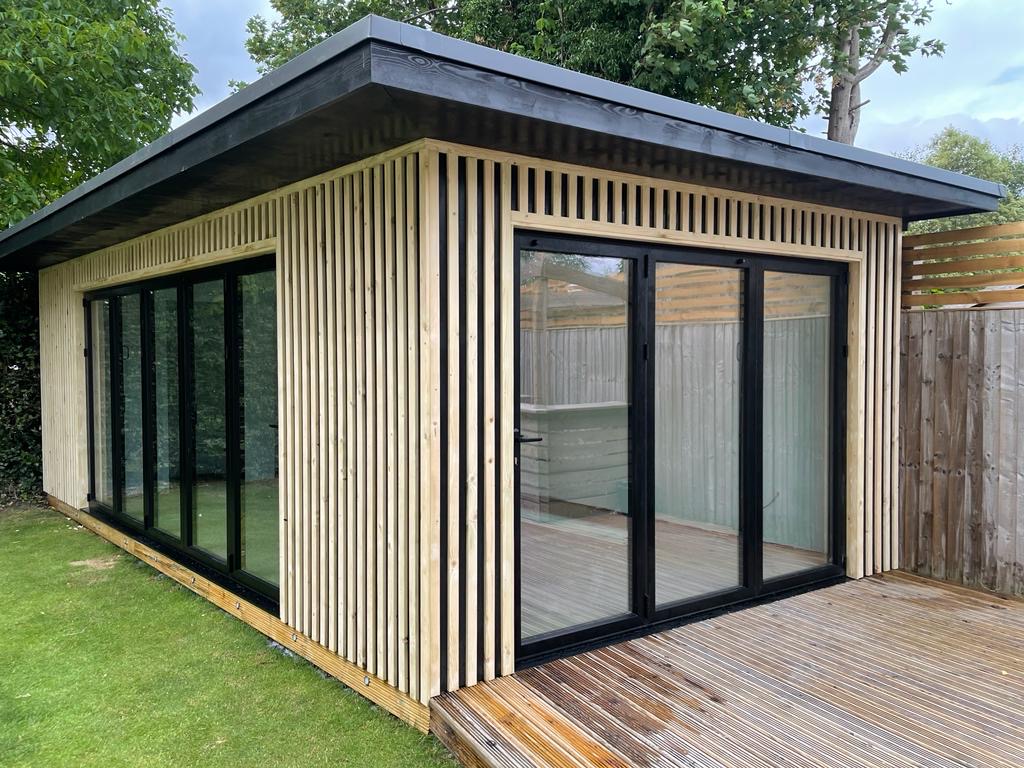
You can save time and money by replacing your commute with a garden office, gaining predictable travel and fewer interruptions. Its compact design improves insulation and lowers utility bills, while daylighting and ventilation reduce energy use. Initial setup, permits, and ongoing maintenance matter for amortization and ROI. A dedicated space boosts focus and workflow through deliberate zoning and fewer home distractions. Long‑term value grows with durability and marketability; explore concrete figures for your plan today.
Key Takeaways
- Garden offices cut commuting time and costs, freeing up hours and boosting predictable, reliable meeting schedules.
- They offer improved thermal efficiency, lower heating/cooling needs, and reduced utility bills over time.
- Initial setup, permits, and maintenance should be budgeted; evaluate amortization and financing terms for true viability.
- A dedicated space reduces distractions, enhances focus, and enables ergonomic, daylight-optimized workflows.
- Increased property value, better energy efficiency, and multipurpose design boost marketability and long-term lifecycle savings.
Lower Commuting Costs and Time Savings
Because you work from a garden office, you avoid the daily commute, and the time saved compounds over weeks and months. Your travel’s predictable, you bypass peak congestion, and you’ve gained reliability for meetings and deadlines. Quantifying savings requires a baseline: daily round trip, fuel or transit costs, wear, and opportunity costs. With a garden office, you eliminate most routine trips, reducing recurring expenses by a clear percentage aligned with your local commute distance. Over a five-day workweek, yearly savings translate into tens of hours and several hundred dollars, depending on fuel prices and transit fares. You can reallocate this time to focused work, errands, or rest, improving productivity and well-being. From a financial perspective, the payback period shortens when you consider reduced vehicle maintenance and insurance exposure. In practical terms, you gain schedule flexibility and reduced exposure to commute variability, enhancing work-life balance without compromising output overall.
Energy Use and Utility Bill Reductions
If you’re sizing a garden office, energy use becomes more predictable thanks to the compact footprint and improved insulation. Thermal efficiency reduces heating and cooling loads compared with a full-size home office, so you’ll see steadier indoor temperatures and fewer fluctuations that drive energy use. The envelope matters: high-R walls, insulated floors, and tight air sealing lower heat loss coefficient, which translates to smaller HVAC runtime. During winter, modest space heaters can be supplemented by radiant floor or under-floor insulation, while summer cooling relies on sensible design features like shading and natural ventilation. You’ll also benefit from daylighting—large windows reduce electric lighting during clear days, and occupancy sensors prevent wasted energy. Electrical demand is predictable enough to plan off-peak storage or solar generation with limited grid import. Overall, utility bills should shrink proportionally to heating and cooling needs, offsetting some fixed office costs, with minimal fanfare, without surprises.
Upfront Setup and Ongoing Maintenance Considerations
Having established how a garden office’s envelope lowers energy loads, you now assess upfront setup and ongoing maintenance to preserve that efficiency over time.
You’ll evaluate site conditions, foundation type, and anchoring requirements, then select components with low thermal bridging, airtight seams, and durable weatherproofing. Budget for installer fees, permits, and potential utility connections. Plan for modular wiring, lighting, and climate control that align with future reconfiguration. Maintainability matters: accessible panels, labeled circuits, and service contracts. Schedule regular inspections of seals, glazing, and roofer joints, plus proactive drone or ladder checks after storms. Document warranty terms, load ratings, and expected service intervals to prevent surprises. Choose materials and finishes rated for your climate, and guarantee compatibility with seasonal storage and pest protection. Finally, implement a maintenance calendar that triggers filter changes, insulation checks, and ventilation recalibration without disrupting work rhythm. This approach guards performance without escalating disruption costs.
Increased Focus, Productivity, and Work-Life Separation
You’ll notice sharper focus as your garden office provides a distinct boundary between work and home. The quiet environment reduces interruptions, supporting consistent productivity and clearer boundaries. In turn, these factors yield better work‑life balance.
Sharper Focus, Clear Boundaries
Creating a dedicated garden office reduces context switching by isolating work tasks from domestic duties, which sharpens focus and boosts productivity. With a fixed workspace, you segment workflow, align tasks to daylight, and minimize interruptions from home routines. This separation yields measurable gains: shorter task completion times, fewer mid-task context shifts, and improved error rates. You gain control over professed boundaries, enabling clearer delineation between work and personal cycles. Scheduling becomes data-driven rather ad hoc, and you can defend time blocks against spillover. While the environment remains subject to weather and seasonal variation, the structure of a garden office supports consistent cognitive load management and task prioritization, translating to reliable daily output and sustainable pace. These boundaries empower focused momentum without eroding personal time.
Quiet Environment, Better Balance
With a quiet garden office, external noise and home interruptions are minimized, helping you sustain concentration and protect personal time. You’ll notice reduced cognitive switching costs as tasks stay in working memory longer, and you’ll experience steadier pace during complex activities. The environment also limits spillover of after-hours concerns into your day, enabling clearer boundary maintenance. You’ll adopt a more deliberate schedule, aligning deep work blocks with peak alertness and minimizing context switching.
In addition, the physical separation supports measured productivity gains: fewer interruptions, faster task completion, and more reliable end-of-day boundaries. You’ll reclaim evenings for nonwork activities, improving overall balance and resilience under steady workload conditions. This structure also reduces fatigue, sustains motivation, and lowers burnout risk over sustained project cycles for you.
Design and Customization That Boost Efficiency
When you tailor a garden office’s design, efficiency gains come from deliberate zoning, ergonomic work zones, and streamlined utilities. You map tasks to spaces, minimizing motion and waiting. Parameters like desk placement, lighting depth, and acoustic treatment are quantified to reduce fatigue and errors. Materials are selected for stability and low maintenance, and data paths are planned to prevent interference with power and network lines. Clear interfaces and standardized connections support quick reconfiguration as needs shift. You also quantify impact through standardized metrics, such as task cycle time, error rate, and setup time, to verify that design changes deliver measurable efficiency.
- Clear zoning aligned with workflow
- Ergonomic, adjustable furniture and equipment
- Routed, shielded utilities with simple access
This design discipline yields repeatable performance gains without expanding footprint. In practice, this focus reduces delays, increases project throughput, and supports scalable office configurations over time, without compromising safety or cost.
Lifestyle Perks: Privacy, Quiet, and Personal Retreat
From the efficiency gains of tailored zoning, you also gain a private, quiet space that supports sustained attention and personal reset. This private, quiet space reduces cross-activity and interruptions, enabling you to structure work blocks with predictable boundaries. Sound attenuation, HVAC zoning, and daylight control contribute to a sensory environment that stabilizes cognitive load. You’ll experience fewer context switches, better error rates, and consistent tempo across tasks.
Privacy safeguards your professional boundary, while retreat features support recovery, concentration, and creative recharging without leaving your home. Ergonomic layout, screens, and door or visual barriers reinforce discretion, reducing spillover from family routines. Routine access to a dedicated space promotes psychological separation from non-work spaces, sustaining motivation during long projects and iterative design reviews. Together, these factors translate to steadier performance metrics, fewer distractions, and a more predictable daily rhythm that supports consistent output and well-being across multiple projects and teams.
Long-Term Value: Resale Impact and ROI
Consider how a purpose-built garden office affects your property’s value and your return on investment over the long term. In appraisal terms, dedicated workspace signals usable square footage, better energy efficiency, and lower disruption to primary living areas, all of which support premium pricing. Your ROI hinges on durability, compliance, and adaptability to changing needs; a watertight, low-maintenance build reduces maintenance churn and avoids retrofits that erode margins. When sold later, buyers may view the structure as functional, multipurpose space rather than a temporary shed, boosting marketability. However, the effect is context-dependent: neighborhood norms, design quality, and local demand for home offices influence resale lift. Quantify expected gains against cost, amortization period, and financing terms to avoid optimistic bias. Use neutral, third-party data where possible, and present conservative scenarios to preserve credibility.
- Durability lowers lifecycle costs.
- Design aligns with local market taste.
- Provide permits and warranties for credibility.
Frequently Asked Questions
Do Home Office Sheds Require Permits and Approvals?
Yes, home office sheds often require permits and approvals. Depending on your locality, size, and use, you may need a building permit, electrical permit, and inspections. Detached structures must meet setback, height, and fire-safety rules, plus zoning and HOA rules if applicable. You’ll typically submit plans, confirm utilities aren’t cross-connected, and guarantee proper foundations. Failing to obtain approvals can trigger fines, removals, or costly retrofits. Consult your authority for specifics.
How Does Home Office Affect Homeowners Insurance Premiums?
Yes, it can raise premiums, depending on policy, location, and risk exposure. A dedicated garden office often qualifies as a separate structure, which may require additional coverage or a rider, increasing replacement cost and liability limits. If you keep it under your existing policy, insurers may discount risks but usually charge extra for fire, theft, or weather damage. Accurate documentation and valuation help avoid underinsuring or unnecessary overcharges for you.
Are There Tax Benefits or Deductions for Home-Office Spaces in My Country?
Yes, there are typically tax benefits for home-office spaces, but eligibility and amounts vary by country. You’ll usually need to use a dedicated area regularly and exclusively for work, with deductions allowed for a portion of rent or mortgage, utilities, and depreciation or simplified square-footage methods. Track direct and indirect costs, maintain receipts, and consult local tax rules or a professional to calculate the precise deduction and maximize compliant savings.
What Climate Conditions Limit Use Year-Round?
Cold snaps, heat waves, humidity, and frozen pipes limit use year‑round. You’ll confront thermal swings, insulation gaps, and ventilation challenges that degrade comfort unless you’re prepared. You’ll rely on robust heating with zoning, high‑efficiency cooling, and moisture control. You’ll plan for seasonal occupancy, weatherproofing, and standby power. You’ll test seasonal readiness, monitor energy loads, and implement adaptive shading, sealing, and drainage to maintain operability across climates, for reliable year‑round use.
Is the Resale Value Impact Consistent Across Neighborhoods?
Not always. The resale impact varies by neighborhood, property type, and market timing. In high-demand areas, a standalone garden office can add value through usable square footage and productivity appeal, while in saturated markets it may offer less incremental value. You’ll see stronger effects where buyers equate the space with work-from-home convenience, energy efficiency, and curb appeal; weaker where buyers prioritize interior upgrades or lack of parking, and neighborhood norms.